Cut first, then automate.
I start with one process that costs your team time today. First we measure together where it really gets stuck. Then whatever nobody needs is cut. Only what is left gets automated.
Jonas Höttler, Balane GmbH, Munich. From the first conversation to the handover, I do the work myself.
Most processes do not get faster through software, but because steps disappear. What has been cut needs no automation.
One method, in this order.
Report, measure, cut, automate. The order is the point: automating first only makes a detour faster.
Schematic: every dot is a reported disruption. Orange means people judge. Green means software works.
1 / 4
Report
The people who do the work every day know where it gets stuck. They note it in the moment, in a few seconds, without workshops or interviews.
Afterwards you have: A list of real disruptions, in your team's own words.
2 / 4
Measure
The reports become a number: which cause comes up how often and how much working time it costs, in hours and in euros.
Afterwards you have: A ranking of bottlenecks instead of a gut feeling.
3 / 4
Cut
Before anything is built, whatever nobody needs goes: duplicate entries, approvals without a reason, steps left over from the old days. Often a mandatory field or a clear owner is enough.
Afterwards you have: A shorter process before a single line of code exists.
4 / 4
Automate
What is left and follows fixed rules is taken over by software, in the systems you already use. Where judgement is needed, a person still decides.
Afterwards you have: A process that runs on its own and that your team operates itself.
Schematic: every dot is a reported disruption. Orange means people judge. Green means software works.
How working together runs.
Five stages. After each one you decide whether to continue. The first two cost nothing.
1
Self-check
Free
You assess one process on your own, online. You see the short evaluation right away, without giving an email address. If you want the detailed report, you get it by email once you enter your address.
Afterwards you have: A first read on where things get stuck and what might pay off.
Start the self-check2
Conversation
Free
30 minutes, online. We walk through one concrete process from your company. I tell you openly whether a closer look is worth it, and if not, why.
Afterwards you have: An honest answer on whether and how to continue.
Get in touch3
Measuring together
Paid. I tell you the price up front in our conversation.
For four weeks you and your team note what gets stuck: in the moment, in a few seconds, without workshops. I evaluate the reports and convert them into time and euros.
Afterwards you have: In black and white: where things get stuck and what it costs.
Talk about the measurement4
Findings
Paid. I tell you the price up front in our conversation.
In the bottleneck diagnosis I go through the biggest bottlenecks from the measurement step by step: what can go, what can be simpler, what is worth automating and what is not.
Afterwards you have: A written plan: what comes first, what comes next, and why.
5
Implementation
Paid. A fixed quote based on the findings.
First we cut, then we automate, with tools such as n8n or Make.com and in the systems you already have. I build together with the person on your side who will own the process afterwards.
Afterwards you have: A running, documented process that your team operates itself.
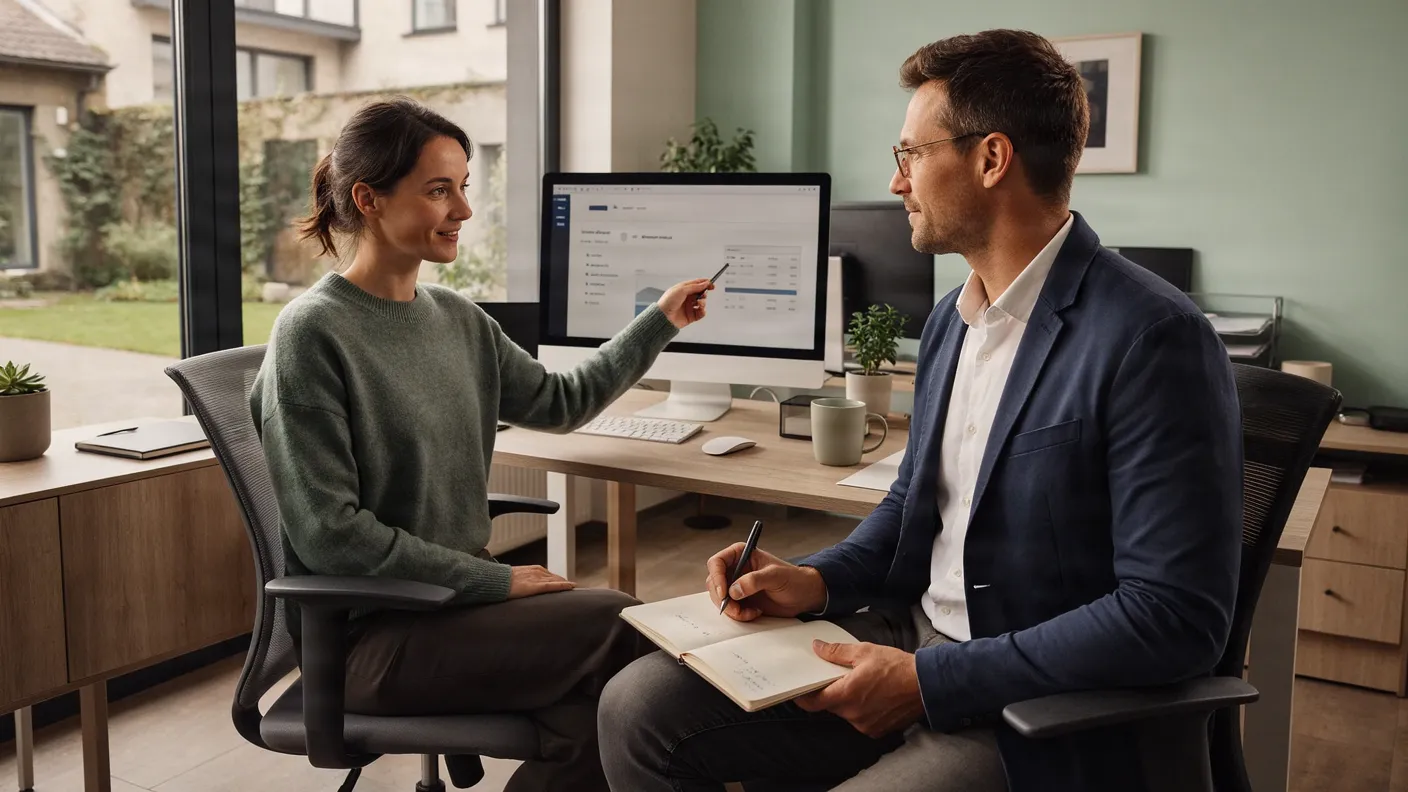
Staged scene
Wednesday, 11:00 am
Built next to the person who runs it afterwards.
Not for them, with them. So your team understands, changes and runs the workflow on its own in the end.
When this fits. And when it doesn't.
I would rather say no at the start than after three months.
It fits if
- your company has roughly 10 to 250 employees.
- there is an existing process that costs your team time. Rebuilding it, cutting steps and changing the order is part of the work.
- someone on your side owns the process afterwards. Without that person I don't build.
- you can make a decision internally and stick to it.
It doesn't fit if
- you are looking for greenfield strategy or a new business model.
- a connection requires certification, for example to a hospital information system (KIS), to the gematik telematics infrastructure or as a DATEV-certified interface. I am not certified for that and will point you to specialists.
- you want to buy a finished product. The processes in the showroom are demos, not software to take away.
- you want to hand off operations for good. I don't offer a maintenance subscription; the solution belongs to you.
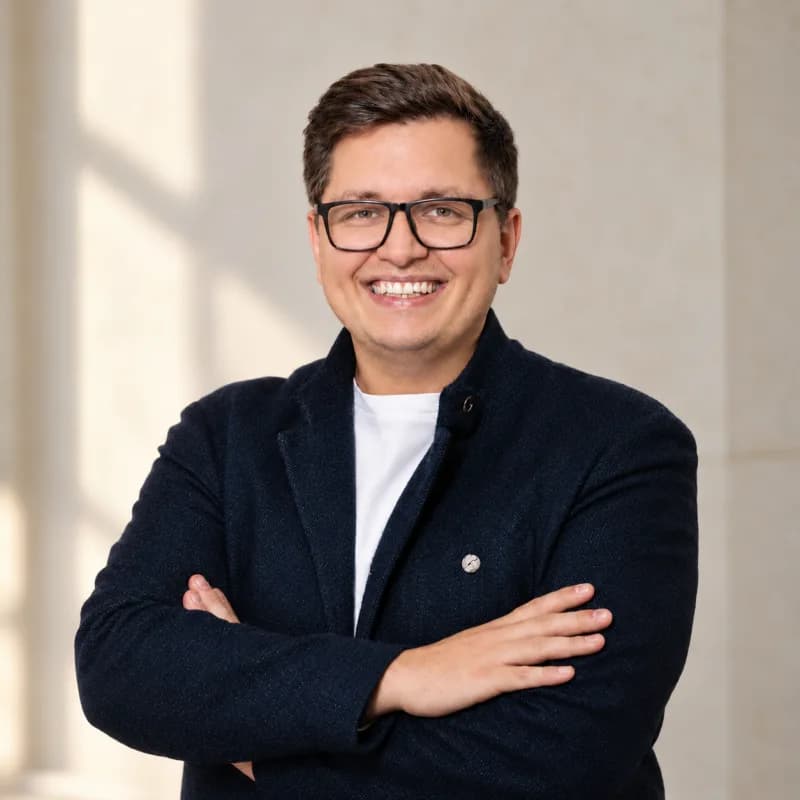
You talk to the person who does the work.
I'm Jonas Höttler. Balane GmbH is my company, and the Automation Showroom is its shop window. Conversation, measurement, findings and implementation are all with me; nothing gets handed on. Because I work alone, I take on only a few projects at a time. If the timing doesn't fit, I'll tell you in the first conversation.
More about meWhat a process looks like after the cut.
Three demos from the showroom: with tools, steps and the points where a person decides. Modelled figures, not client projects and not products for sale.
Which process costs your team the most time?
Tell me about it: 30 minutes, online, free. Or assess it yourself first, in the self-check.